Cornerstone Community Outreach is in one of the most transformative periods in our organization’s history. Across our shelters, redevelopment projects, healthcare initiatives, and leadership growth, we are building a stronger model of care centered on dignity, healing, stability, and long-term housing outcomes for people experiencing homelessness.
Our vision is not simply to provide temporary housing. We are working to create welcoming, trauma-informed environments where individuals and families can stabilize, access healthcare and supportive services, regain independence, and move toward permanent housing. Through non-congregate shelter design, integrated behavioral health and medical partnerships, workforce development, and organizational growth, Cornerstone is building a model that strengthens both immediate care and long-term community impact.
Much of this work is already underway, and continued growth depends on partnership and support from funders, healthcare leaders, public agencies, foundations, corporations, faith communities, and individual donors who believe homelessness should be addressed with dignity, quality care, and long-term vision.
Currently Operating Programs
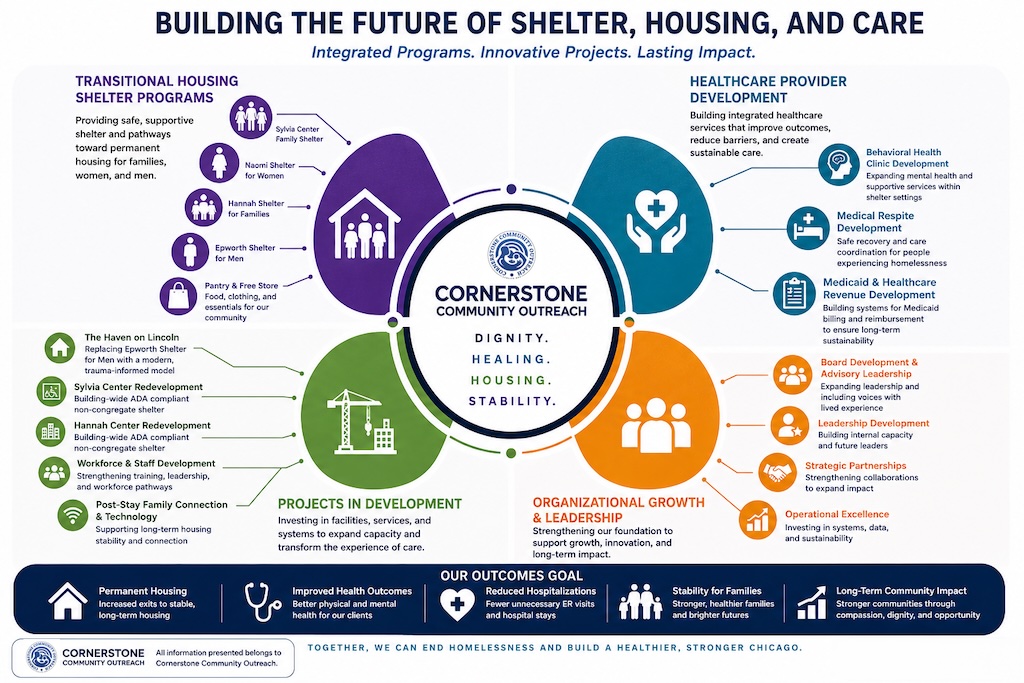
Transitional Housing Shelter Programs
Cornerstone operates transitional housing shelter programs for families, women, and men experiencing homelessness across multiple Chicago locations. These programs provide safety, stability, meals, case management, and pathways toward permanent housing in a dignity-centered environment, their home until they are permanently housed.
Sylvia Shelter for Families
Sylvia Center is an active family shelter serving families experiencing homelessness while helping them stabilize and move toward permanent housing. Currently providinghousing for up to 28 families at one time in a semi-congregate setting. Opened in 2001 as the first intact family shelter in Chicago, at the same time, Sylvia is preparing for a major redevelopment that will transform the facility into a modern, ADA-compliant, non-congregate family shelter.
Hannah Shelter for Families
Hannah Shelter provides safe shelter and supportive services for families experiencing homelessness. Established in 1989 as the first family shelter in Chicago, providing housing for up to 14 families at one time, the program is also part of Cornerstone’s broader vision to create more private, accessible, and supportive spaces for residents.
Naomi Shelter for Women
Naomi Shelter provides shelter, stabilization, and support for up to 44 women experiencing homelessness at one time in a congregate setting. Opened in 1998 as the need grew in Chicago, the program helps residents connect with housing, healthcare, and other resources needed for long-term stability.
Epworth Shelter for Men
Epworth Shelter provides transitional housing shelter and supportive services for men experiencing homelessness. Cornerstone began operating this program in 2009, and the program focuses on stabilization, housing navigation, and connection to employment, healthcare, and permanent housing. This project is transitioning into the much awaited Haven On Lincoln!
Pantry and Free Store
Cornerstone’s Pantry and Free Store provide food, clothing, household items, and other essentials for residents and community members. This program helps meet immediate needs while offering practical support that strengthens dignity, stability, and connection.
Projects in Development
The Haven on Lincoln
The Haven on Lincoln is Cornerstone’s newest transitional housing location, designed to replace and strengthen the current Epworth Shelter for Men model with private rooms, supportive services, and a more dignified environment. This project represents a major step forward in trauma-informed, non-congregate shelter design centered on dignity, privacy, healing, and housing. A joint project between the Chicago Departments of Housing, Family & Support Services, and Public Health, creating the best-in-class dignified spaces.
Status: The Haven on Lincoln is opening soon!
Sylvia Center Redevelopment
The Sylvia Center redevelopment will transform the active family shelter into a fully ADA-compliant, non-congregate transitional housing model with private family units and integrated service space. This project will improve safety, accessibility, privacy, and long-term stability for families experiencing homelessness.
Status: Pre-Development and Capital Advancement
Hannah Center Redevelopment
The Hannah Center redevelopment will modernize the women’s shelter into a more private, accessible, and trauma-informed environment. The project will strengthen the quality of care available to women while creating space for integrated behavioral health and supportive services.
Status: Pre-Development and Capital Advancement
Behavioral Health Clinic Development
Cornerstone is developing Behavioral Health Clinic capacity to provide stronger mental health and supportive services within its shelter settings. This work will expand clinical infrastructure, improve access to care, and help create more sustainable service funding through Medicaid.
Status: Pre-licensing
Medical Respite Development
Cornerstone is developing a Medical Respite model for people experiencing homelessness who need a safe place to recover after hospitalization or medical crisis. This project connects housing, healthcare, and care coordination to reduce avoidable hospital use and improve health outcomes.
Status: Finalizing, will follow opening of the Haven on Lincoln
Workforce and Staff Development
Cornerstone is strengthening staff training, leadership development, and workforce pathways to support higher-quality care. These investments help retain skilled staff and build the organizational capacity needed for growth.
Status: In-process and expanding training curriculum
Board Development and Advisory Leadership
Cornerstone is expanding its board development work and building advisory leadership structures to support the organization’s next stage of growth. This includes creating stronger pathways for strategic expertise, community partnership, and guidance from people with lived experience of homelessness.
Status: In-process with board development consultant and fellows.