Oswaldo’s Story

Below is a client story from successfully housed client Oswaldo. Names have been changed.

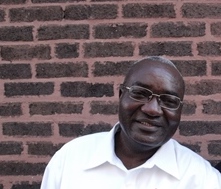
Oswaldo came to Cornerstone almost as soon as he first stepped foot into America, with a week’s stay sleeping at a police station in between. He speaks mostly French, but he’s in good company, as nearly half of our men’s program speak French. Many of them take EAL (English as an Additional Language) classes at Truman College, and when someone new comes to the program, they support one another in navigating a new city. 

Oswaldo left his home country after experiencing extreme violence at the hands of law enforcement there. Oswaldo considers Cornerstone his first home in America. He says he was very happy with Cornerstone – he says “The staff respected me and treated me as a human. Everyone in the program is treated as equals – everyone.” 

When someone moves to a new country, they lose so much of the support network they had before. Oswaldo was able to be regularly in touch with his family, thousands and thousands of miles away, through his phone – but in his present and immediate surroundings, everything was completely new, from the people to the places to the very words people spoke to him. Oswaldo’s case managers helped him get connected with Truman college to take English classes, and to start applying for housing. When Oswaldo told his case managers he wanted to get connected to a therapist, Cornerstone’s Medical Coordinator collaborated with a volunteer to find a French-speaking private practitioner – a woman who was so compelled by Cornerstone’s mission that she significantly lowered her rates for Cornerstone, and came on-site to meet with Oswaldo every week. 

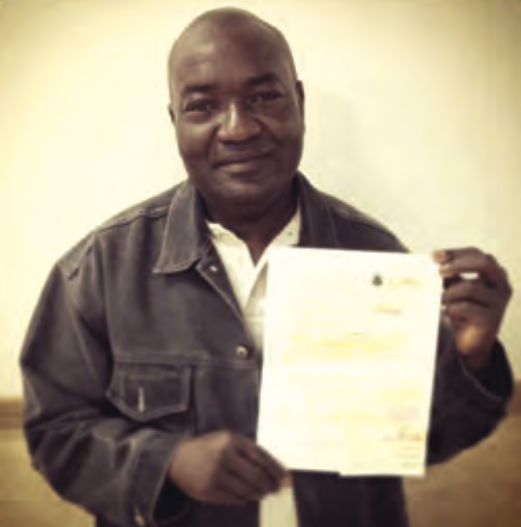
And finally, Oswaldo got the news that he had been accepted into housing. He was thrilled. Cornerstone helped him pick out supplies for his new home, and celebrated with him as he signed his new lease and moved out of our shelter. 

The support system Oswaldo built while at Cornerstone continued to be there for him as he adjusted to living on his own. He and his therapist continued meeting together weekly at Cornerstone for several months after he moved out, to ensure that he still had mental health support during the major transition period from shelter to housing. He is still taking English classes across the street from Cornerstone at Truman College, and he visits Cornerstone often, to pick up any last pieces of mail and to speak with his friends and former case managers. 

When we asked Oswaldo what he liked most about being housed, he told us that he loves having a quiet place to read. He reads all the time now, and he loves it. In the men’s program at Cornerstone, our volunteers keep a bookshelf stocked with books tailored to the interests of the readers in the men’s program (the biggest hits currently are historical narratives among the older men, comic books among the younger men, coffee table books with photos for those who don’t like to read as much, and crosswords for the men learning English) and people love it – but it can be a challenging place to really get settled into a book. When you walk onto the men’s program floor, you’ll probably experience a barrage of different noises happening all around you – the TV on, people making phone calls, chatting with one another, the buzz of an electric razor as people help one another cut their hair and shave, someone playing video games, someone studying for school – in all, there’s a lot going on. As much as Oswaldo enjoys coming for a visit, there’s something truly special about getting to go home to his own place and read to his heart’s content. 

He dreams of one day bringing the rest of his family to join him in America. He wants to continue learning English, and to someday go to business school. “Cornerstone was my first home here”, he says. We’re honored to have been the place that welcomed Oswaldo into America, and we hope to be that place of refuge and rebuilding for many more years to come. 

Dinner Guests -the Meal Ticket

In the 1980s, Jesus People USA began providing meals to neighbors and to anyone who came to its doors.

What began as a simple meal shared in the community dining room soon became something more. Each day, Dinner Guests, our neighbors, were welcomed in, seated, and served the same meal the community had prepared for itself that evening. Community members Frank and Ephraim helped lead the food program, offering not only a plate of food, but a sense of order, dignity, and welcome.

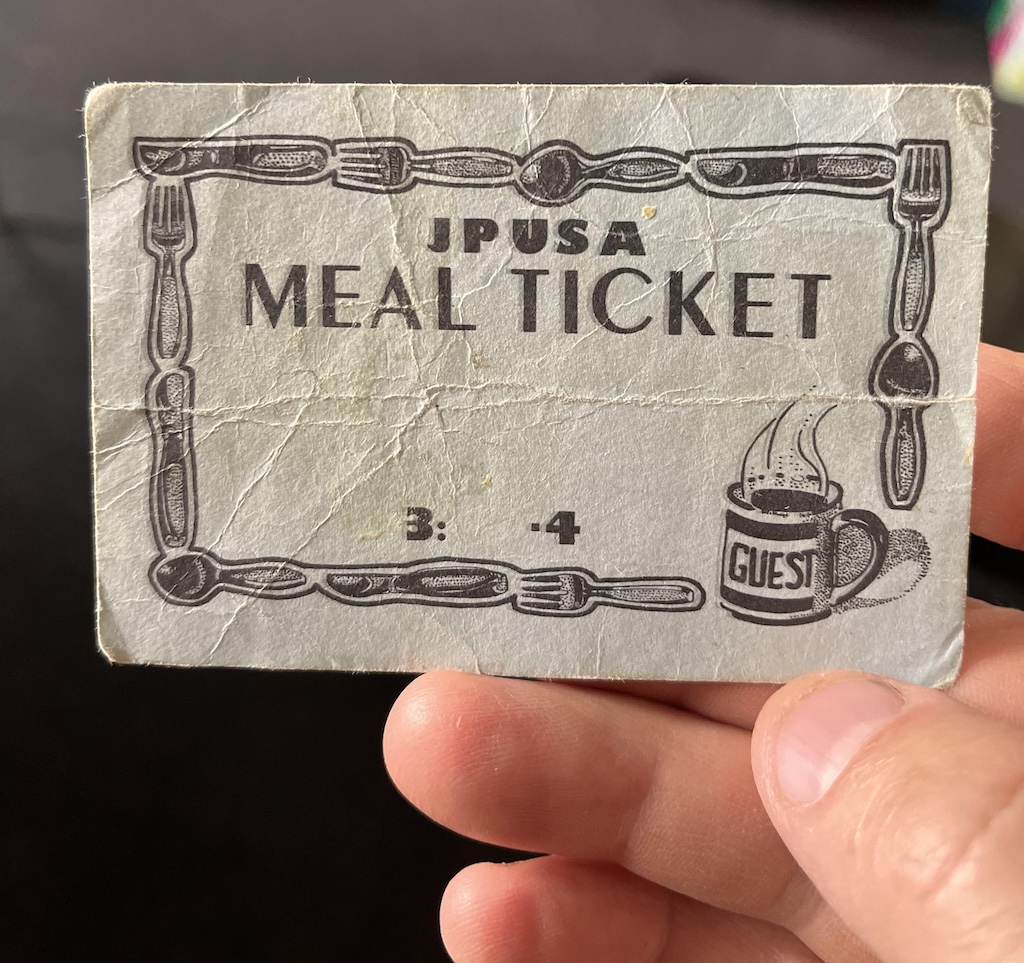
The lines were often long. To make sure everyone could be served fairly, volunteers used the JPUSA meal ticket system. Tickets were given to those waiting outside, based on the number of seats available in the dining room. As Dinner Guests entered, they handed in their tickets and filled each seat. When people finished their meals and left, they were counted, and the next group waiting outside was invited in.

I remember those lines clearly. More than 50 people often came each day, including men, women, and children, all looking for a meal and a place where they would be received with care.

That daily rhythm of welcome became part of the foundation for what Cornerstone Community Outreach would become. We continued serving dinner in the community dining room for several years, until the shelter opened on Clifton. From that point forward, meals were served from the shelter site, and the work of hospitality continued to grow.

Those early meals remind us that Cornerstone’s mission has always started with a simple conviction: people experiencing hunger and homelessness should be met with dignity, kindness, and practical care. What began around shared tables has grown into a broader ministry of shelter, housing, healthcare connection, and support, but the heart of the work remains the same.

Reflection by Kathy Anderson, long time supporter and volunteer.

Sheila’s Story

Sheila was a client of our Naomi women’s story, recently housed.

“I want to say that the situation in my country is very hard.”

Sheila, a client from our Naomi program, tells us about what brought her to Cornerstone. She came from her home country to Chicago last year, and 11 months later she has a job and a home of her own. 

Growing up, Sheila studied rigorously. She was a high achiever and strongly believed in her own responsibility to her people. But she was kidnapped on her way to work as a young woman, an event which highlighted her need to escape the country she loved so much. “There is no food, no hospital, no education. I didn’t see my life there. I came to America. Sometimes I’m still crying for my family, sometimes I’m still crying for my country.” With the help of her niece, Sheila made her way to Chicago and landed at Cornerstone. 

She says, “Last year, when I came here I did not speak English very well. Trust me. You helped me go to Truman college,” she says, addressing her case manager, Eve. “It’s a very professional school – when you’re not speaking English well, the teachers have patience for you.” When asked what she most longed for upon her arrival, Sheila says that she wanted to go to school, go to church, and take care of her family and her community – and that’s exactly what she’s been doing ever since. She wanted to pay for her education on her own, so she got a job and started taking classes at Truman College. She found comfort in prayer, in walking the 20 minutes to Lake Michigan, in reading, and in listening to music.

“The shelter helped me with getting a doctor, with food, with clothes, and shoes,” she says, and “I see the team working – you have been given a job to do, and you do it well”. 

Sheila says she is leaving with contentment. She has not stopped thinking about her family, her community, back home. She has an admirable love and compassion for the country that was so unsafe that she had to leave – she says, “I tell you, I love my country, I love my people”, she says. Really, her stay at Cornerstone is just a tiny piece of Sheila’s life. 

I personally happened to meet Sheila for the first time a few weeks before she moved out of Cornerstone. She was wearing a sophisticated white pants-and-top set, and she told me she was about to leave for her graduation ceremony. That day, she got her nursing assistant certificate, and walked in cap and gown. 

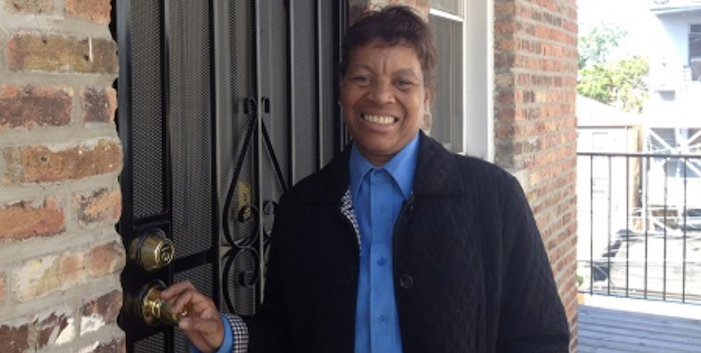
Just a few weeks later, Sheila, the case managers, and the program aides on the women’s floor sang Kool and the Gang’s “Celebration”, and danced, as the ink dried on Sheila’s new lease. It was a day of great accomplishment for Sheila – a milestone of her journey to the United States. She’s now working as a certified nursing assistant, a job which she loves. And she has her own kitchen now (she loved to cook back home, and she was very good at it). 

We wish the absolute best for Sheila, for her family, and for the communities she loves. 

“It’s time to come together – 

It’s up to you, what’s your pleasure?

Everyone around the world, come on!

It’s a celebration!”

  • Written by Ellen, interview translated from French by Caro

Child at CCO to Medical Technician!

This story is from the CCO Archives.

When Lillian’s* family came to CCO, she was 12 years old, but she wasn’t new to the homeless experience. For years, she and her family had shuffled from one extended family member’s house to another. At each new destination, disputes erupted, and she and her family were again displaced, forced to move on to the next couch, floor space, or basement. Lillian grew up with a front-row seat to the destabilizing effects of homelessness but she found hope.

“It was always the same, every day after school. I would make up a story to tell my friends why I was walking the other way. ‘I’ve got to go to my uncle’s house.’ I didn’t want them to know I was homeless. I was ashamed of it. I never shared it with anybody, and they never knew.

Cornerstone Helped Me

“To live under a dictator is like slavery. There is no justice. There is no peace. It is not a free country.” Over fifty years of living under a Congolese dictatorship was long enough for Ildevert Mboungou. In the Congo, Ildevert worked as a chef for the employees of a major oil company. The authorities found out that he was a supporter of the Democratic party, and the dictatorship that ruled and mistreated the Congolese people for decades took revenge. Ildevert had to leave his employment, home, and all he knew. He escaped his homeland and fled to America.

“I flew directly to Chicago. I did not know anyone. I was alone and deeply sad. I was living near the El train station. A man approached me and spoke my language. He told me he knew where I could get help and brought me to CCO. I do not know who he was.”

Homeless shelters do not exist in the Congo, and Ildevert was unaware that help was available or how to find it. This kind stranger took him from being isolated and living outside to CCO where he could find a sense of community, support, and help for the future.

“I came to CCO with only a plastic bag that held my Bible, documents, passport, and coat. That is all I had, but I was happy to find shelter. I met Franke, Andre, and Jeremy, and they made me feel welcome. I could have meals, clothing, showers, and a bed. I am no longer alone and outside. Coming to the shelter was extraordinary.”

During Ildevert’s stay, he worked closely with his case manager to access an ESL course at Truman College and certificate training in Food Service through a local non-profit. He became an active volunteer at the Kolver Center for survivors of politically sanctioned torture. CCO staff rejoiced with Ildevert when he received his political asylum certificate. Ildevert was reunited with his family when they came to Chicago, and they found a home. It has been a joy to see great things in Ildevert’s life.

  • Ildevert Mboungou, as told to Beth Nicholls and translated by Franke Moukiama

Denise, from Isolation to Hope

“In my storage unit, I was too cold to rest. I wanted a place to lay my head down and sleep. I would wrap up in ten blankets, trying to get warm.”

– Denise

Denise seems to have an endless abundance of joy. She’s a very petite woman in her late 50s with bright eyes and a wide, welcoming smile. She exudes positivity and wields an upbeat personality. Her solid work history spans three decades at a major Chicago company, where she rose through the ranks from a part-time mailroom position in 1979 to full-time Engineering Clerk after twelve promotions. But early retirement, prompted by her decision to fund her son’s college education, left her financially strained.

Finding a job proved difficult. Denise eventually lost her apartment. She had an outdoor storage space that measured 10 feet by 10 feet in a lot on the south side of Chicago. It held all the items from the apartment she lost, and with nowhere else to live, Denise moved into it. Without any heat and only a few flashlights for light, Denise prayed, read her Bible, and cried a river in that storage unit. Keeping clean was a real challenge. When she tried to wash up in a public restroom, she endured looks and comments from people who seemed to fear or despise her. Her former life was utterly lost.

Denise stayed in her storage unit for three long years and throughout notoriously harsh Chicago winters. She often rode the public transit system to escape the cold. “I was tired of riding the buses to stay warm, but no one ever robbed me. An angel must have been sitting beside me.” Throughout those years, Denise hid these circumstances from her son, who lived out of state.

Hard-working, sweet, and struggling to survive, Denise had been forced so far out on the margins of society that she couldn’t find her way back. This past January, Denise arrived at Cornerstone. After three years of living alone, one would think that Denise would find sharing a shelter space with 74 other women at Naomi Shelter nearly impossible. Not so! Denise soon began to encourage women younger than herself, giving wisdom and helping to defuse tense situations.

While at Cornerstone, Denise felt that God told her, “I’m giving you the rope, but it’s up to you to grab ahold and pull yourself up.” She did just that. With the help of her case manager, Denise completed security guard training, earned her PERC (Permanent Employment Registration Card), and got a full-time job as a security officer. When speaking about Naomi Shelter staff, Denise said, “They supported me. The case managers got to know me and took time with me. I felt they respected me.”

For the last eight months, Denise has worked full-time as a security officer for a domestic violence shelter that serves women with children. She enjoys her work immensely. The day Denise moved into her apartment, she shouted, “Lord, You have been good to me!” She then sat down and cried tears of gratitude.

Denise’s story is about age discrimination, isolation, and hope. Although she had a solid work history and experience, Denise struggled to find a job which caused her long stretch of homelessness. She sees her arrival at Cornerstone as a turning point in her life. Once she had shelter and support, she climbed out of the situation she was stuck in. We have been blessed by her stay and applaud the employer that saw what we see in Denise – a resilient, enthusiastic, hard-working woman who simply needed a job.

  • Denise Hardy, as told to Beth Nicholls, originally published on November 25, 2015

I hope you enjoyed reading how Denise moved from isolation in her storage unit to hope and opportunity at Cornerstone and beyond. CCO needs your support to continue the critical work of welcoming anyone experiencing homelessness. Please consider donating today. Your gift could transform lives and bring hope to those who need it most. Click here to visit our Donate Page.
Thank you!

  • Beth Nicholls, Cornerstone Community Outreach

Sandra’s Path to Peace

“The path to peace is a lifelong journey. Sometimes you’re on a paved road. 

Sometimes you’re walking on a gravel or dirt road.

 It’s still your journey. It’s not just for a bit of time. It’s for a lifetime.”

Sandra

“My daughter Isabella was only 11 years old when we had the most surreal conversation of her young life. It was a Saturday morning in June of 2021. Secretly, we discussed the abuse we faced daily. We were no longer going to be told we were worthless and substandard. We decided it was time to leave my husband and California behind. Together, we looked at a map of the United States and chose Chicago.

From that moment forward, we quietly and methodically carried out our escape plan. Isabella and I came back from the laundromat with fresh, clean clothes. We folded and placed them carefully into Isabella’s dresser we had emptied earlier. To anyone looking on, it appeared that we were doing regular household chores. Internally, we were fighting a storm of fear mixed with absolute determination as we prepared to go. It was all done in stealth mode, very fast, very ‘hush-hush.’ When my husband left Monday morning, we took the clothes, identification, and precious photos out of Isabella’s dresser and put them into our suitcase. Lisa, Isabella’s beloved teddy bear, came along with us. We were moving halfway across the country, leaving the certainty of pain in California. The uncertainty of the unknown lay ahead. Inwardly, we felt a gentle gust of hope roll over us as the bus carried us away.


I was only seven years old when my mother died. She passed away two days after my youngest sister was born. It was as if a bolt of lightning had struck our family. In a flash, everything changed. I had grown up with abuse from my stepdad. When my mom died, my two older siblings and I were shuffled back and forth between our three aunties’ houses. My three younger siblings, which included my baby sister, were put with their biological grandmother, my stepdad’s mom. She was a violent woman and thought my younger siblings should never see us. We only lived five houses away from each other in a small Mississippi town, but we were a world apart. Sometimes my little brother would sneak over to see us. She would come flying down the road beating him and dragging him all the way home. He just wanted to see us. These memories of fractured relationships have stayed with me. They influenced the decisions that have formed my future. 

Scarcity also played a role in my life. My upbringing was impoverished. Everyone I knew was struggling to get by. I’m not ashamed of my background. I believe it’s what made me want to go into social work. I felt driven to be part of the solution and help others. I worked hard in school and went on to college. I graduated from Mississippi Valley State University with a degree in Social Work. Through college, I learned to set goals and achieve them. My friendships became like family. I began to grow a strong support network and understand its importance. As I worked toward my degree, I could feel the variability and chaos of home replaced by a set routine with some sense of order. I understood that my life experiences could help and benefit others. Little did I know that in the future, the splintered pain of the past would grow into a vast support network for myself, Isabella, and other families with similar experiences.


The Greyhound arrived at the Chicago Station. Isabella and I were free from our life in California. Tired and apprehensive, I held onto the hope that in Chicago, we would find a home where we wouldn’t endure endless criticism and torment. I found a rooming house-type situation on the Southside of Chicago. It was just a bed. No meals. No help. We had to walk several miles to a dollar store to buy food. We had arrived in a food desert. It was tough. I knew we needed to get out of there and find a place that offered us some assistance and practical support. From my phone, I Googled “Homeless Shelter for Families.” Cornerstone popped up, so we got on a train and headed to the north side. Hannah Shelter had space for us! The kitchen had put a few plates of food aside. That night we dined on spaghetti, coleslaw, and chicken. We came hungry, the food was good, and we were glad to have it.

I was 35 when we arrived at Hannah Shelter. Most parents living there were in their early 20s and had younger children. The younger moms came to me for advice. I worked in social services in Los Angeles. I was glad to offer help, encouragement, and resources that could get us on our feet. We were in it together. It felt good to use my education and work experience to help others. 

While living at Cornerstone, I was allowed to train as a Life Coach. The training empowered me to start my own life coaching business, Path2Peace. Subsequently, Chicago Hopes asked me to facilitate parent support groups for the moms at Hannah Shelter. Chicago Hopes (CH) is a non-profit that provides academic support, mentorship, and services to parents and children experiencing homelessness. CH offers these essential services inside Hannah Shelter, so it is accessible for shelter guests. One day, I was meeting with the Family Engagement staff person,  I told her, “Your job is so cool. I would love to have your job.” Then she left! Chicago Hopes offered me the job. That’s how I became the Family Engagement Administrator! They only interviewed me as a formality. The job was always mine. I continue to do parent workshops, but I love my new position. It was another opportunity to uplift young moms recovering from homelessness, poverty, and abuse.

Isabella and I spent this Thanksgiving with my baby sister and my other siblings. My baby sister and I have been talking a lot. We hadn’t had a relationship until last year. Now, we’re making up for lost time! We weren’t able to be sisters before but we’re grown now. We don’t need someone to tell us whether we can talk to each other. Nobody is going to whoop us for behaving like sisters. And that’s what we are. 

Like our first meal at Cornerstone, our first meal in our new home was spaghetti. I felt gratitude and immense pride as we set up our new place, making it a sanctuary filled with love and safety. After a year in our cozy basement apartment, we managed to move up to another unit in the same building. As we cleaned out the old space, we gave thanks for the shelter it provided, marking a year of new beginnings, growth, and deepening connections.

I recalled the field trip we took to the zoo just a few days before moving from the shelter into our apartment. I felt free at the zoo with the moms and kids from Hannah Shelter. It was a warm summer day, and the sky poured. We all began screaming, laughing, and running in the rain. That day was more than a visit to the zoo—it was a reminder that we had choices and a support system through both the hard and good times. It was a beautiful way to close that chapter, the final step toward a new beginning for Isabella and me.


“She was bent but not broken.

She fainted but did not fail

and rose to the challenge to overcome each obstacle thrown her way.” 

– Shirena Houston, Hannah Shelter Program Manager, when asked to comment about Sandra


“I want to thank my Program Director and Case Manager,

Shirena Houston,

and the Cornerstone Community Outreach staff

for your love and support during one of the lowest moments of my life.”

– Sandra


This true story was written from conversations between Sandra and Beth Nicholls. 

Names have been changed. 
No Gift Too Small

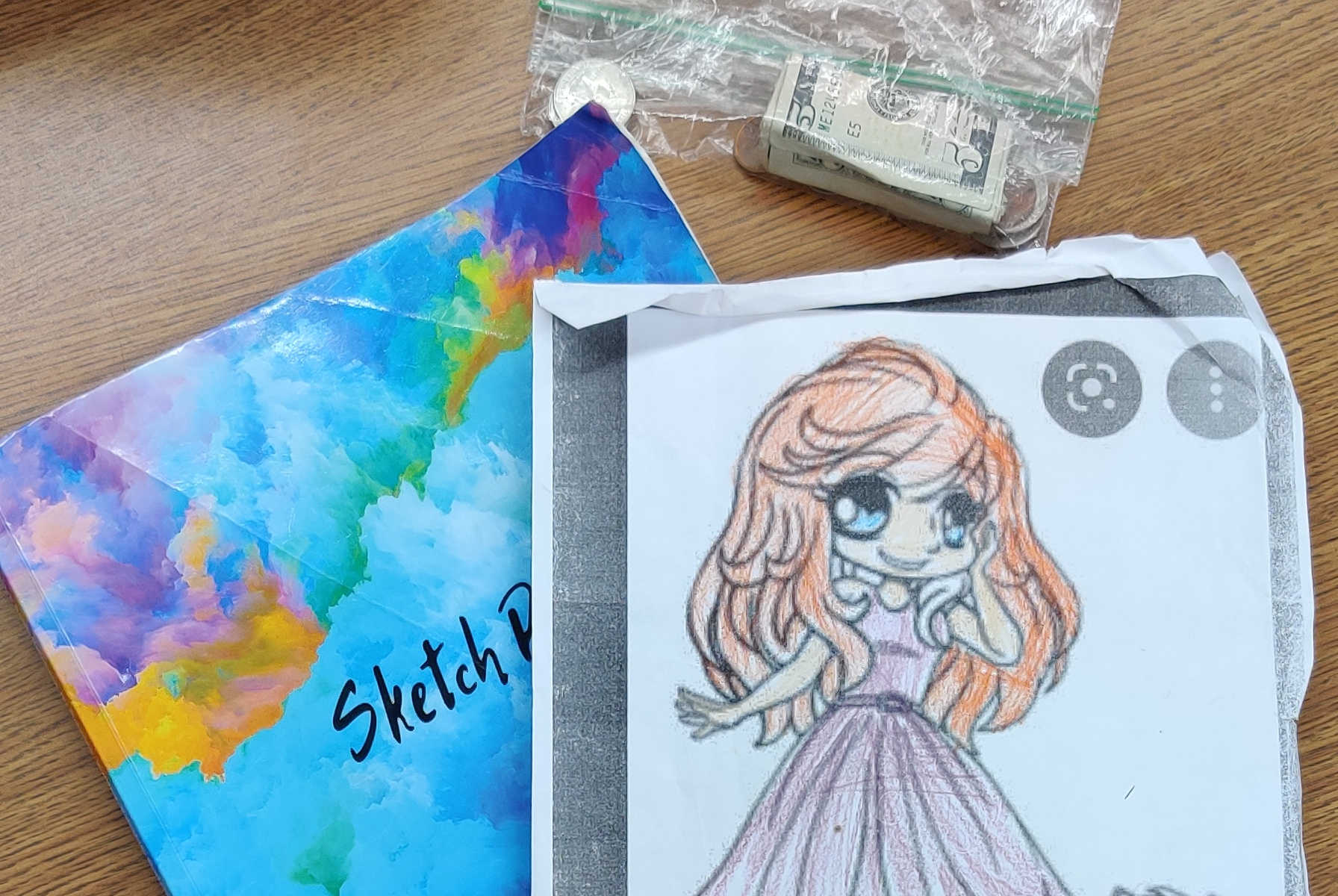
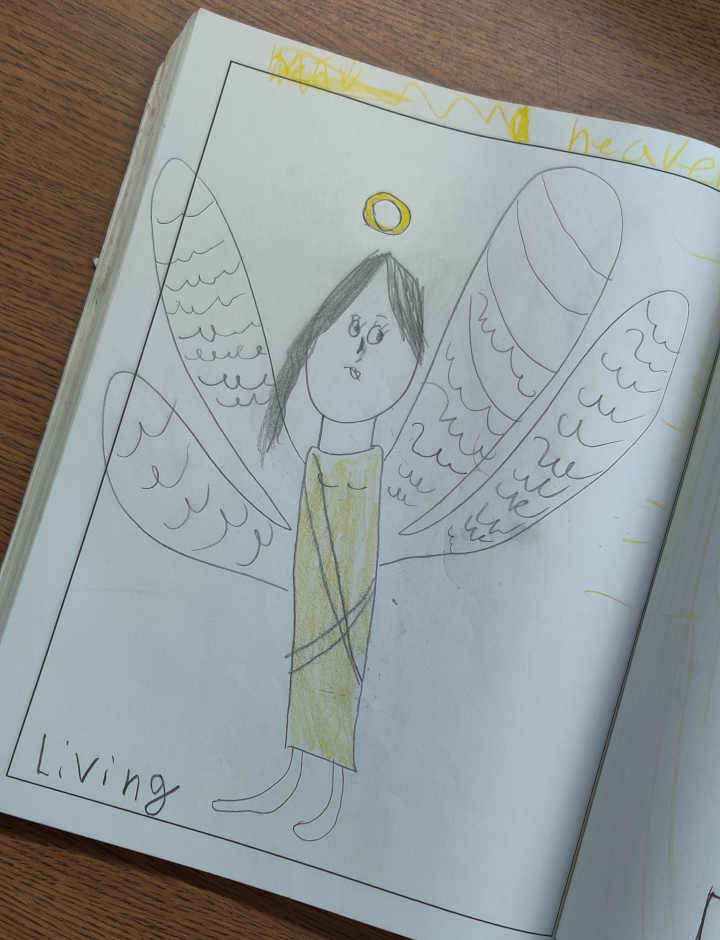
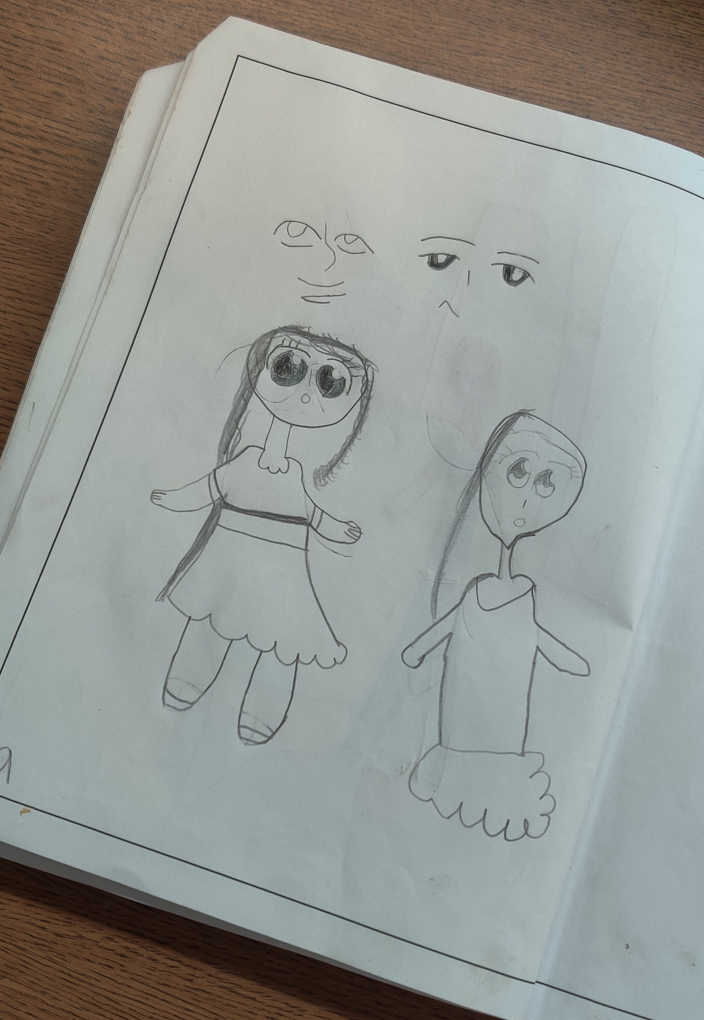
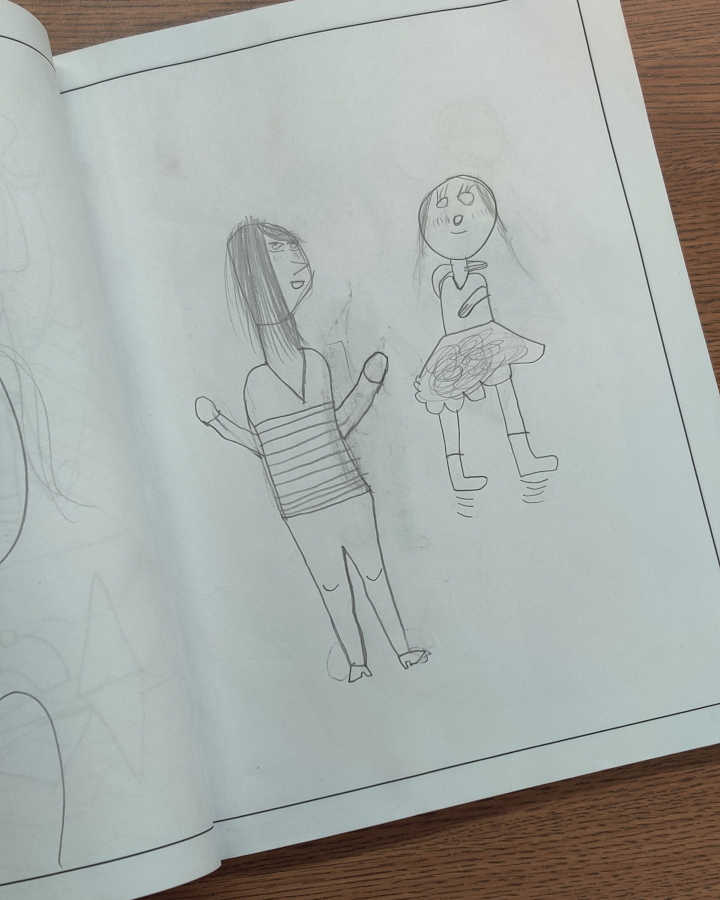
Eve Haycock, Naomi Program Director, was visiting friends when a young lady discovered that she worked at CCO. Intrigued, she asked many questions about the shelter and the people living there. This young person was deeply moved by Eve’s description of CCO’s work with individuals experiencing homelessness and expressed a desire to contribute. She offered Eve the sketchbook she had been drawing in all year as a token of hope and donated all the money she had saved over the summer from her allowance to support the residents.

We at CCO are so grateful for this young ladies gift. It may seem small on the surface but the gift of hope goes deep into the hearts and lives of those who have little. This donation of hope may be the best gift we have received all year. Thank you.

Congratulations Graduates!

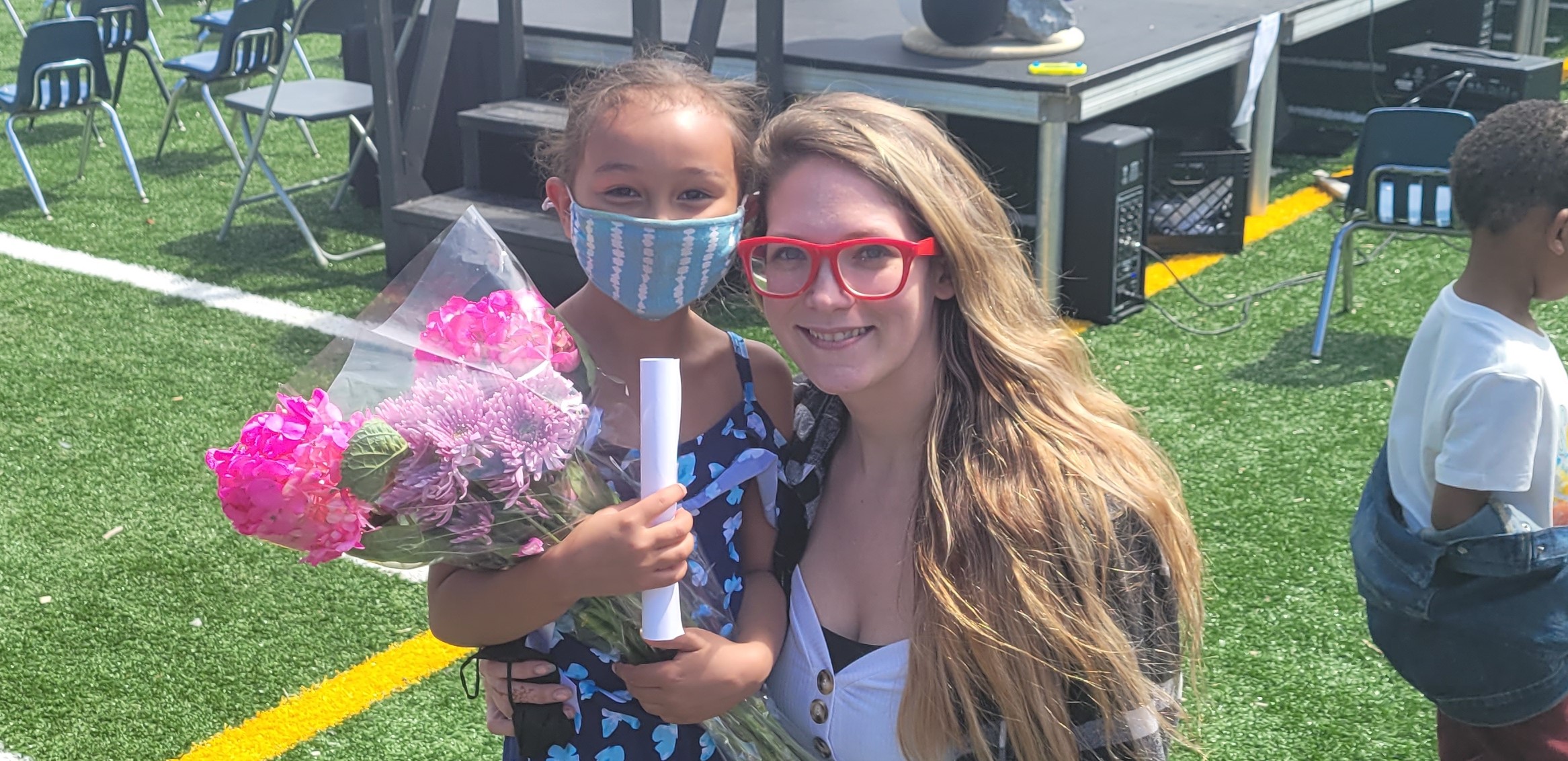
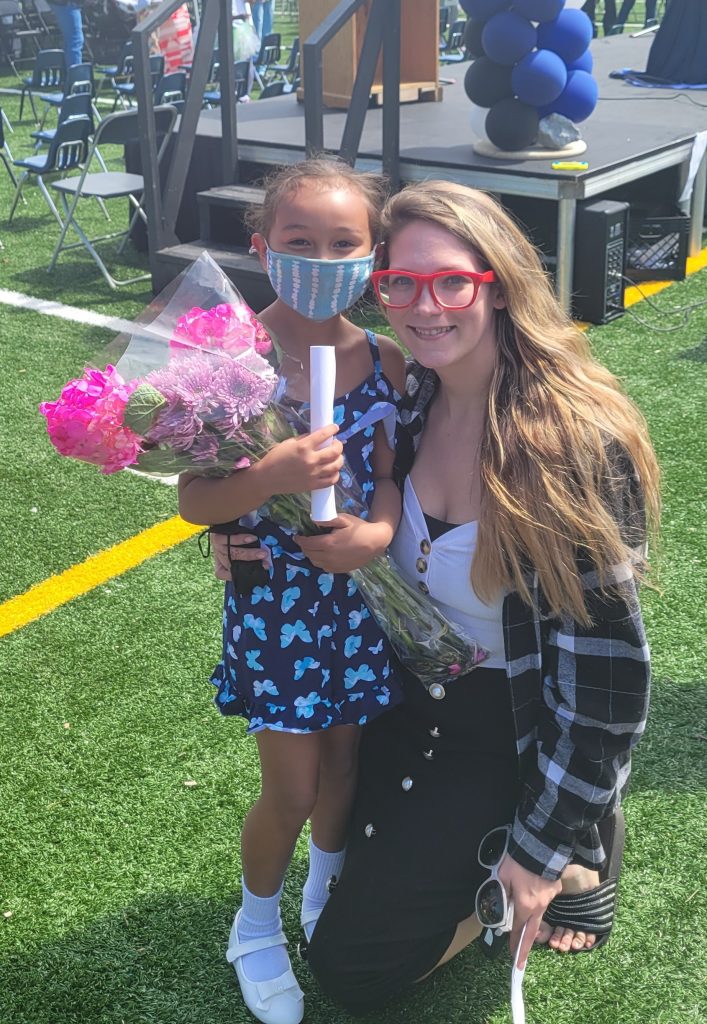
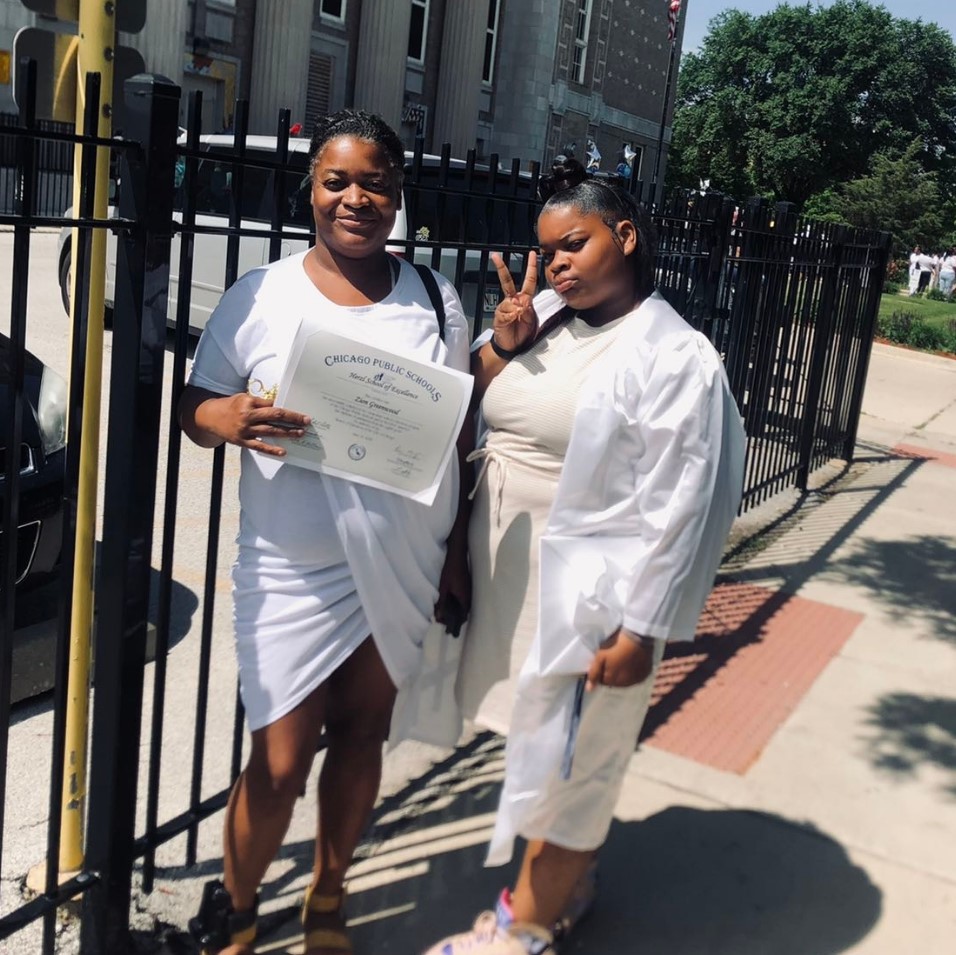
On June 10th, Amanda Learmond, resource manager for Cornerstone Community Outreach (CCO), had a conflict with three of her former clients. It wasn’t the usual type of resolution she is called upon to deal with on a daily basis at the shelter. No, she had three invitations to graduations from former clients of CCO. 

The three families had been shelter guests at the height of the COVID-19 pandemic, and all three families had been successfully housed. During their time at CCO, Amanda was each family’s case manager, working closely with them to overcome the barriers keeping them in homelessness. During that time they all formed a deep bond that continued after the families transitioned to permanent housing. Amanda worked closely with these families not just during their stay at CCO but in their new homes, visiting them and offering continued support.

“Even though I don’t have family in Chicago, with these families I feel like I have family in Chicago,” Amanda says. “I feel so honored that I was invited into these families’ lives. These parents and guardians inspire me in the way that they continuously create opportunities for their children in spite of their challenges.”

But with such a close connection with each family it was a hard decision to choose which graduation to attend. Jocelin was graduating from Kindergarten, Zion was graduating from 8th grade and Luis was graduating from high school. Each of these children had overcome great obstacles to finish their grades all while coming out of homelessness during a pandemic.

In the end Amanda was able to check in on all of them. “Even though I wasn’t able to watch each of them walk the stage, I was able to be with them to celebrate their accomplishment. My biggest dream is to watch Jocelin and Zion graduate from high school and Luis to graduate from college. I can’t wait to cheer for them then.”

Luis will attend college at National Louis University on a full scholarship to study business and then go on to complete a degree in civil engineering.

Amanda’s story is such a wonderful example of how when a family comes to CCO they become a part of the Cornerstone family and how we at Cornerstone become a part of theirs. Amanda said she is very grateful to everyone who contributed to make this experience possible, and encourages everyone to consider donating to Cornerstone to make more possibilities happen.

Click here to donate to keep these life changing experiences happening!

Congratulations Carla!

From the CCO Archive: Carla’s story was originally published in September of 2013.

“The night before I came to CCO, I slept out on a park bench. I said I would never stay in a shelter. And what did God do? He put me right in a shelter and blessed me there.

 I thought people in a shelter had to sleep on the floor. I was afraid that people would steal my stuff and that it would be dirty. I thought I would have to leave in the early morning and stay out all day. Naomi House has been totally different. I have a case manager, three meals a day, I didn’t have to sleep on the floor or leave during the day. It isn’t dirty. I’ve improved mentally, physically, spiritually and emotionally.”

“Recently, I got a housing call and I was told, ‘It’s a go! Start packing!’ I have a place and I’m so excited about my little apartment! It’s perfect for me. And it makes me think about how good God is!”

-Carla, as told to Beth Nicholls

It would be difficult to talk to Carla and miss her determination and gratitude. After months of hard work, Carla turned the key to her own apartment. She looks back on her experience at the Naomi Shelter for Women as a stepping stone to stable housing. It has been a joy to work alongside her! Congratulations Carla!


Carla came to Naomi Shelter for Women from a park bench. Many shelter guests are welcomed into CCO after sleeping in doorways, vehicles, city buses, trains, and other places not intended for human habitation. In 2021, 30% of shelter guests entering the Naomi Men or Women’s Shelter Programs were “sleeping rough” the night before. Sleeping outside diminishes the physical and mental health of people experiencing homelessness. It makes them vulnerable to sleep deprivation, hunger, and violence.

Please stand with Cornerstone by helping to provide safe shelter space and permanent housing for Chicagoans experiencing poverty and homelessness. Your donation will ensure that beds, meals, and wrap-around services that available to someone sleeping on the street tonight. Click here to donate today!